

How MRI’s work and what they can reveal about your health
magnetic resonance imaging

Hello there. Today I enlighten yall about MRIs, a revolutionary technology that has transformed medical diagnosis. be sure to like, share & subscribe. Comment down bellow or in the thread about any other topics you guys want to see

Introduction
Magnetic Resonance Imaging (MRI) is a non-invasive imaging technology that produces detailed anatomical images. It is often used for disease detection, diagnosis, and treatment monitoring. It is based on sophisticated technology that excites and detects the change in the direction of the rotational axis of protons found in the water that makes up living tissues.
How does it work
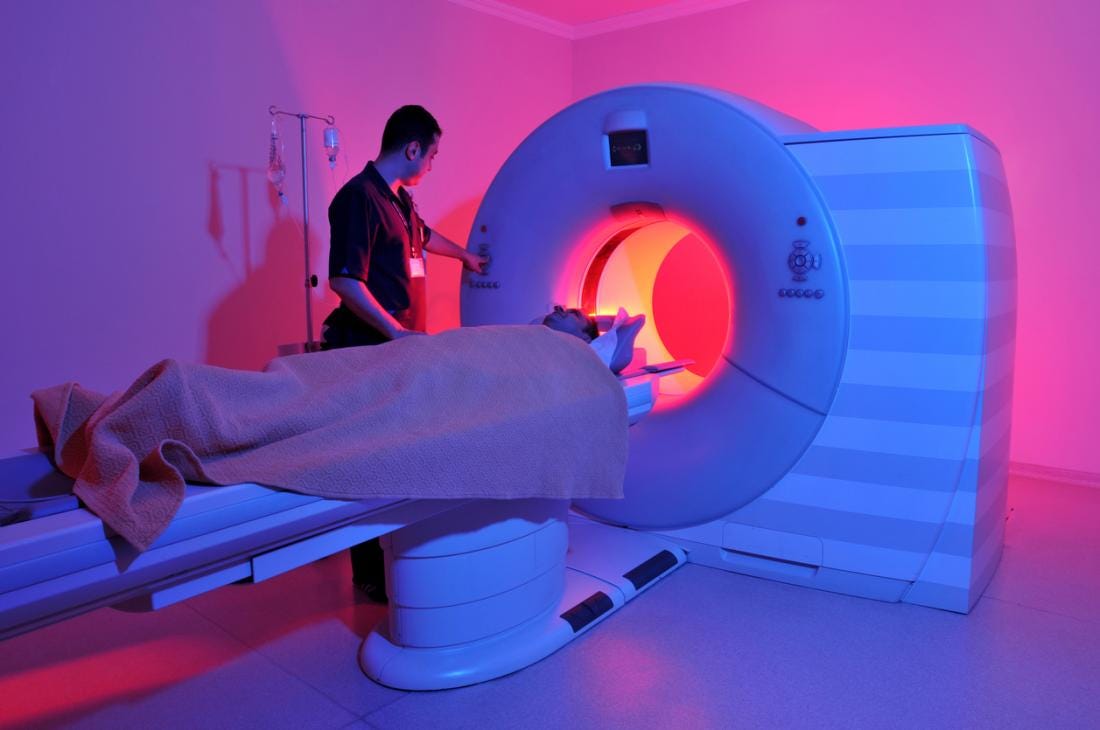
MRI machines consist of a magnet, radiofrequency transmitter, and computer. The magnet aligns the hydrogen atoms in the body's tissues. The radiofrequency transmitter sends a signal to the body, causing the atoms to move out of alignment. When the transmitter is turned off, the atoms release energy that is picked up by the receiver and sent to the computer. The computer uses the data to create detailed images of the body's organs, bones, and soft tissues.
Advantages
Non-invasive: MRI is a non-invasive imaging technique, which means it does not require any incisions or needles to produce images of the body's internal structures.
Safe: MRI does not use ionizing radiation, making it safer than X-rays and CT scans, which can be harmful in high doses.
Detailed images: MRI can produce highly detailed images of the body's internal structures, including soft tissues, which can be difficult to see with other imaging techniques.
Multi-planar imaging: MRI can produce images of the body in multiple planes, allowing doctors to see structures from different angles.
Versatile: MRI has a wide range of applications in medicine, including the diagnosis and treatment of cancer, neurological disorders, joint and musculoskeletal conditions, heart and vascular conditions, and spinal cord injuries and abnormalities.
Disadvantages
Cost: MRI machines are expensive to purchase, operate, and maintain, which can limit access to the technology for some patients and healthcare providers.
Time-consuming: MRI scans can take longer to complete than other imaging techniques, and patients may need to lie still for extended periods of time, which can be uncomfortable.
Claustrophobia: MRI machines require patients to lie in a narrow, enclosed space for an extended period of time, which can be challenging for individuals who suffer from claustrophobia.
Metallic implants: Patients with metallic implants may not be able to have an MRI scan, as the strong magnetic field can cause the implant to malfunction or move.
Noise: MRI machines can produce loud, banging noises during the scanning process, which can be uncomfortable for patients and may require the use of earplugs or headphones to protect their hearing.
Limited availability: While MRI technology is becoming more widely available, there are still areas where access to MRI scans is limited, which can result in delays in diagnosis and treatment for patients.
An MRI scan usually takes between 15 to 90 minutes to complete, depending on the size of the area being scanned and the number of images being taken. The entire process of an MRI scan, including preparation and aftercare, can take about 1.5 to 2 hours.
And that’s it for this week. Be sure to give any topics you want to see in the chat thread or the comments. Till next time, pa(bye in Romanian)
great stuff. Also, effects of bad sleep